Tractor and Farm Equipment Transport in South Africa
Farm equipment rarely sits next to a tarred road. A tractor bought at an auction in the Free State, a planter sent to a dealer for repairs or a baler moving between farms in different provinces all need a vehicle that can reach the site and load safely. Square Load lets you describe the machine, its condition and the farm access once, and receive quotes from verified transporters with flatbeds, step-decks or lowbeds. Accurate dimensions and weights are the starting point, because they decide which vehicle can legally and safely carry the equipment.
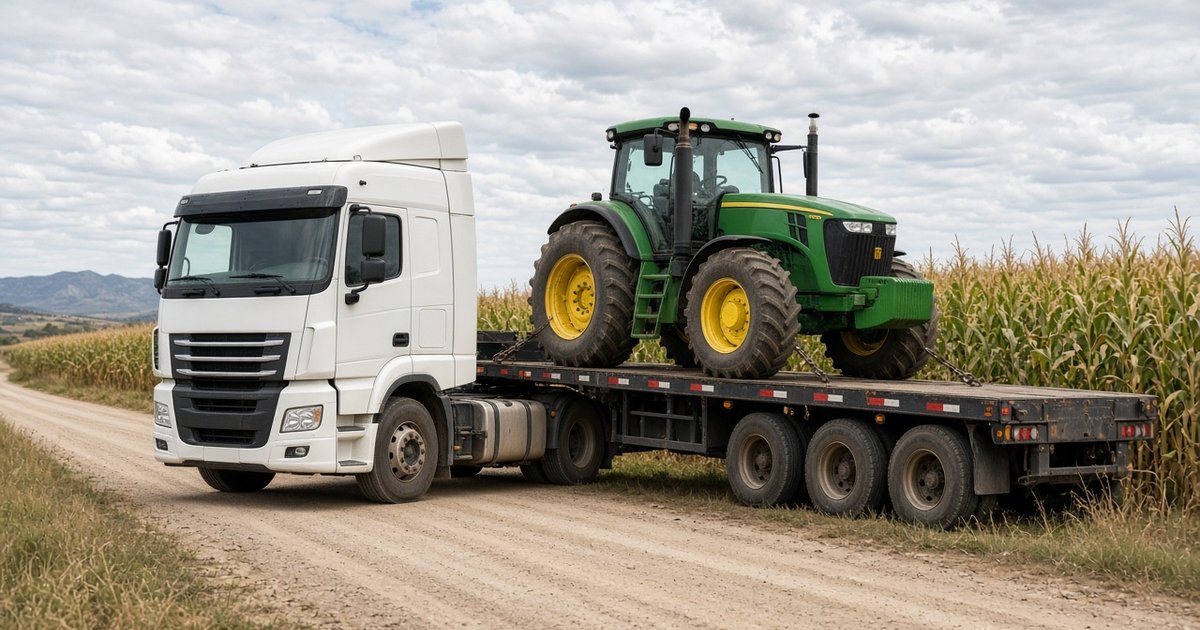
Typical farm transport jobs
Auction purchases are a common reason: buyers often need a tractor or implement collected within a few days of the sale. Dealers move new and used machines between branches and customers, and workshops collect equipment for repair. Farmers expanding to a second property may move a whole set of implements, while contractors take harvesters and balers between regions as the season changes. Each job has its own handover conditions. Say who releases the machine, whether the auctioneer or dealer has a collection deadline, and whether a loader or forklift is available on site.
Choosing the right vehicle
A compact tractor or a small implement may fit on a flatbed or a bakkie trailer. Larger tractors, combine harvesters and wide implements usually need a step-deck or lowbed, and some exceed normal width or height limits. In those cases the transporter may need an abnormal load permit and escort arrangements, which can add time to planning. Give the length, width, height and approximate mass, including any front loader, dual wheels, cab or ballast weights. State whether implements will travel attached to the tractor or separately, and whether a three-point hitch item must be removed.
Farm access and loading
Describe the route from the public road to the loading point: gravel roads, low-water bridges, gates, cattle grids, overhead power lines and soft ground after rain all affect which truck can arrive. Say whether the tractor runs and can drive onto a ramp, or whether it needs a winch, crane or another machine to load it. Mark a firm, level area where the truck can turn. Clean mud and crop residue off the equipment before collection, and secure loose parts such as weights, toolboxes and hoses. Photograph the machine from all sides so its condition is recorded before loading.
Insurance, documents and responsibility
Verification on Square Load is not a guarantee that every loss is covered. Ask the transporter to confirm goods-in-transit cover for agricultural machinery, the declared value, any excess and exclusions, and whether loading and unloading are included. Keep proof of purchase or a release note from the auctioneer or dealer, and agree who signs at collection and delivery. If an abnormal load permit is required, confirm who arranges it and how the schedule allows for it. Record the agreed arrangements on the platform so there is a clear account of the job.
Farming corridors in South Africa
Equipment often moves between the Free State, North West, Mpumalanga and Limpopo maize and livestock regions and the Western Cape’s fruit and wine areas. Johannesburg to Bloemfontein, Johannesburg to Rustenburg, Pretoria to Polokwane and Johannesburg to Kimberley are useful planning routes, although many jobs start or end on farms far from these cities. These are examples, not scheduled services. A shared load may combine several stops, so confirm the collection window and delivery date before booking.
How to compare and book
Post your load free with photographs, collection and delivery areas, dates and the details discussed above. Verified transporters can then send quotes through Square Load. Compare the proposed equipment, inclusions, timing and transporter reviews before you book the offer that fits your needs. Keep questions and agreed arrangements on the platform; full contact details are shared once booking is confirmed. Posting and receiving quotes are free for clients. The client pays the transporter directly for the agreed transport. Square Load’s platform success fee is paid by the transporter on a booked job and is reflected in their transporter balance; it is not a separate client posting charge. Check the current fee and booking conditions in the terms and How It Works pages.
Frequently asked questions
- Can a non-running tractor be transported?
- Yes, if the transporter has a winch, crane or other loading method. Say whether it rolls, steers and brakes, and what equipment is available on site.
- Do wide implements need a permit?
- Loads beyond normal width, height or mass limits may need an abnormal load permit and escorts. Give exact dimensions so the transporter can advise.
- Can a truck reach my farm?
- Describe the access road, gates, bridges, power lines and turning space. The transporter can then decide which vehicle can safely reach the loading point.
- Should implements travel attached to the tractor?
- Agree this with the transporter. Some implements must be removed for height, width or load securing reasons.
- Can you collect from an auction?
- Yes. Include the auctioneer’s collection deadline, release documents and on-site loading arrangements in your request.
- Is farm equipment insured in transit?
- Confirm the policy, declared value, excess, exclusions and loading/unloading cover directly with the transporter before booking.